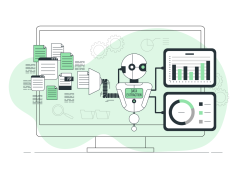



While Amazon builds a wall around its checkout, Walmart is handing AI agents a key to the store — and a wallet with a limit. The October 21 announcement of Agent Profiles, the Walmart Agent Gateway and a published set of Agentic Access Terms is the clearest signal yet of how the two retail giants diverge on agentic commerce. Read the design carefully, and the first wave of agent-driven buying will not look like shoppers expect: it will start with the weekly basket, not with big-ticket items.
The architecture Walmart laid out is deliberate. Agent Profiles, due within the next month, give every outside AI agent its own account profile inside a customer's Walmart and Sam's Club account, with separate purchase history, per-purchase approval by default, and optional spending limits — the company's own examples are $50, $100 and $200. Coverage by Phoenix Network's tech desk, citing TechCrunch, notes that customers link their Walmart account the first time an agent shops, set permissions or limits, and can delete a profile at any time; the feature is open to all account holders and does not require a Walmart+ membership. The Walmart Agent Gateway is a direct channel for agents built on the Model Context Protocol (MCP), routed through Walmart's own assistant Sparky, opening first as an invitation-only beta for companies and developers, with access "may be suspended at any time" per the beta page. The terms are blunt: agents must not act beyond the customer's intent, must not access payment-card data, must identify themselves as automated, and can be blocked from the site for violations. Walmart's returns process applies when an agent buys the wrong thing, including cases where the agent did not perform as intended.
The context makes the contrast sharp. A month earlier, Amazon began blocking Meta's Muse agent from completing purchases on Amazon.com. Walmart, by contrast, already sells through integrations with Muse, ChatGPT and Gemini, and president and CEO John Furner discussed the formalized approach at the Masters of Scale Summit in San Francisco, per TechCrunch. Winning With Walmart framed it as Amazon's wall versus Walmart's open door: the gateway extends Walmart's existing principle — outside agents connect through the customer's Walmart account and the approval controls Walmart sets — to every approved agent.
The most revealing numbers are not in the announcement. Walmart's executive vice president of AI acceleration, Daniel Danker, told WIRED in March that purchases completed inside ChatGPT converted at about a third of the rate of shoppers who clicked through to Walmart.com, which is why Walmart pivoted to a Sparky app inside ChatGPT that completes checkout through Walmart's own payment rails. And Walmart U.S. CEO David Guggina said at an Oppenheimer conference in June that units sold through Sparky were up four times year over year, driven largely by replenishment of consumables and food, as reported by Talk Business & Politics.
Read those facts together and the strategy becomes legible. A $100 spending cap with a returns backstop is a comfortable setting for a pantry restock, a diaper reorder or a household-essentials run — and an uncomfortable one for a television. Walmart's Terms of Use reserve the right to cap the value, quantity or frequency of agent purchases and to limit which items agents can buy. At ICR 2026, Danker described the logic behind the Gemini partnership in the same terms: discovery happens elsewhere, but the basket is built over several days, and Walmart's job is to be the destination where the weekly basket closes. That is high-frequency, low-decision replenishment — exactly where Sparky has already shown fourfold unit growth.
There are rough edges that betray how early this is. PPC Land noted that Walmart's corporate newsroom post described MCP as "model text protocol," a drafting error in the very protocol its gateway is built on — a small but telling sign that the machine-to-machine layer is still being invented in public. The gateway is invitation-only, features "may change," and no participating agent companies are named on the beta page; the company has opened a request page for developers, but the terms under which access will be granted remain opaque.
For the wider agent ecosystem, the significance goes beyond retail. By publishing Agentic Access Terms and exposing an MCP-based gateway, Walmart is effectively writing the template for how a large merchant admits third-party agents: identity requirements, intent boundaries, spending authority and an audit trail through the customer's account. The separation of agent purchase history from the customer's own is a privacy design that other retailers are likely to copy, and the requirement that agents identify themselves as automated answers one of the compliance questions that has dogged bot-driven commerce. OpenAI's Instant Checkout experiment showed the demand side — shoppers will buy inside a chat interface — while Walmart's Sparky pivot corrected the economics; the gateway extends that corrected model to any approved builder. Amazon's wall and Walmart's open door are therefore not just competing strategies; they are competing standards for how agents will be governed everywhere.
For suppliers, category teams and B2B marketplaces, the implication is practical rather than futuristic: agent volume will not arrive as a wave of considered purchases, but as a steady trickle of automated replenishment. High-frequency consumables — food, cleaning, baby care — where purchase cycles are short and the customer already knows the SKU are the first categories that need agent-ready product data, consistent pricing and stable availability. The agents are coming through the door Walmart just unlocked; the question is whether the shelves behind it are stocked for them.