


The editorial view
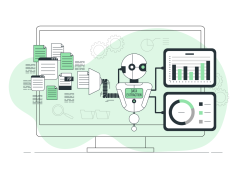
AI is now everywhere in supply chain software, and that is precisely the problem: the industry has solved the problem of getting AI into the demo, but not the problem of getting AI to make decisions that a planner can actually trust. The bottleneck is not model supply, it is execution. A language model that can summarize a forecast is not the same as a system that can rebook a shipment in minutes with confidence, and conflating the two is how supply chain AI projects quietly fail (Source: https://www.supplychaindive.com/spons/supply-chain-ai-has-an-execution-problem/872776/).
The structural mismatch
The core objection is architectural. Decklar, a supply chain decisioning vendor, argues that the dominant agentic AI architecture, a general-purpose LLM wrapped in tools, fed prompts and polling APIs at human pace, is fundamentally the wrong shape for supply chain decisioning. The decision window is minutes, sometimes seconds, and the action has to be specific to that shipment, that lane, that SKU, that customer contract and that regulatory regime (Source: https://www.decklar.com/resources/blogs/why-generic-agentic-ai-will-fail-supply-chains-the-case-for-decision-ai-built-ground-up/). That is a different engineering problem from building a chatbot, and it will not be solved by more tokens or bigger models. The same theme appears in practitioner writing: one engineering account of a national cargo safety triage system described eliminating 72% of routing LLM calls by moving deterministic triage logic out of the language model entirely (Source: https://dev.to/jayeshtankariya/sub-100ms-cargo-food-safety-triage-eliminating-72-of-routing-llm-calls-in-national-supply-chains-3b6l).
The reliability problem is structural
There is also a documented reliability ceiling. TechTarget reported that researchers at Harvard, MIT, Purdue and Georgia Tech ran agents through a supply chain simulation with identical data and observed that large language models are probabilistic: they can produce different outputs from one execution session to the next even when inputs do not change. Carol Long, a researcher at Harvard, put the management question bluntly: “We would be cautious about granting open-ended authority” (Source: https://www.techtarget.com/ai/feature/Supply-chain-AI-agents-Where-should-autonomy-begin-and-end). Academic evidence cuts the same way: a 2026 arXiv study using the MIT Beer Game found that an out-of-the-box reasoning model can exceed human-level average performance and that optimized reasoning models reduce costs by up to 67% relative to human teams, but that strong average performance masks substantial reliability problems in individual runs (Source: https://arxiv.org/html/2605.17036v1). Average-case confidence is exactly what a planner cannot afford when the tail case is a missed contract deadline.
What the research says about the missing layer
Another strand of research suggests the fix is not in the model at all. A 2026 study on generative AI in supply chain management concluded that neither strategic intelligence nor operational stability is sufficient alone: a brilliant strategy is useless without the operational stability, delivered through centralized information sharing and disciplined replenishment, that tames the bullwhip effect (Source: https://arxiv.org/html/2508.13942v1). Related work on LLM-based multi-agent systems found that a fixed-ordering strategy prompt can produce optimal ordering decisions in restricted scenarios, but that consistency across diverse supply chain situations remains an open question (Source: https://arxiv.org/html/2602.05524v1). In other words, the execution layer, the deterministic decision engine underneath the language model, is what turns AI output into a decision the business can stand behind (Source: https://www.supplychaindive.com/spons/supply-chain-ai-has-an-execution-problem/872776/).
Where the field is heading
There are signs of progress in encoding supply chain expertise directly into decision systems. Nvidia and Palantir have described work codifying supply chain expertise with Nemotron models on Palantir Foundry, noting that specialization improved the decision task even when fine-tuning failed to solve every prediction problem attached to it (Source: https://developer.nvidia.com/blog/from-wafer-out-to-first-token-codifying-supply-chain-expertise-with-nemotron-and-palantir-foundry/). In procurement, Chinese chemical giant Wanhua has deployed an AI pricing engine that parses thousands of non-standard quotes in real time and integrates raw material trends, exchange rates and energy costs, reporting pricing efficiency gains of more than 300% versus manual review (Source: http://m.toutiao.com/group/7701565316602364416/). These examples share one trait: they put the model inside a structured decision process rather than letting the model improvise one.
What this means for B2B buyers
The editorial read for procurement teams is practical. When evaluating supply chain software that advertises AI, the questions to ask are not about model names: they are whether the system has a deterministic decision engine under the language model, whether the AI's recommendations are validated against real operational data rather than demos, and who is accountable when the recommendation is wrong. The test the Supply Chain Dive analysis suggests every planner should run before trusting an AI recommendation is simple: does the system show its work, and can a human override it in the decision window (Source: https://www.supplychaindive.com/spons/supply-chain-ai-has-an-execution-problem/872776/)? Until those questions have answers, treat supply chain AI as a co-pilot with a documented failure mode, not an autonomous decision-maker (Source: https://arxiv.org/html/2508.13942v1).
A practical checklist for procurement
Pulling the evidence together, the checklist for a B2B buyer evaluating any AI-claimed supply chain product is short but demanding. First, ask what happens under the model: is there a deterministic decision engine that applies the business rules, contract terms and regulatory constraints, with the LLM only handling interpretation (Source: https://www.decklar.com/resources/blogs/why-generic-agentic-ai-will-fail-supply-chains-the-case-for-decision-ai-built-ground-up/)? Second, demand reliability evidence from real operations, not benchmark averages, because the Beer Game results show strong average performance can coexist with unreliable individual decisions (Source: https://arxiv.org/html/2605.17036v1). Third, define the override path: who decides when the AI and the human disagree, and how quickly a human can intervene inside the decision window (Source: https://www.techtarget.com/ai/feature/Supply-chain-AI-agents-Where-should-autonomy-begin-and-end). Fourth, check whether the vendor can point to deployments where operational stability, not model cleverness, delivered the result (Source: https://arxiv.org/html/2508.13942v1). Vendors that pass these four questions will survive the execution problem; vendors that only demo will not.